


‘We can either expend public funds to destroy value and emit carbon, or we can convert liabilities into assets:
safer communities, cleaner air, and lower-cost inputs for essential industries,’ writes Charles Diggs, CEO of Dynasafe.
Weapons disposal is usually framed as a security issue. Less discussed is the industrial opportunity hidden inside every obsolete shell, rocket, and mine: steel. When demilitarisation is performed with modern, contained processes, the same materials once engineered for lethality can be redirected into civilian supply chains. The result is a rare alignment of objectives—public safety, lower industrial costs, and measurable progress towards net-zero manufacturing.
The majority of munitions are mostly metal
The majority of munitions are mostly metal. A typical artillery round contains roughly fifteen per cent explosive by weight; the balance is steel or speciality alloys with high industrial value. For decades, legacy practices such as open burning and open detonation neutralised the explosive hazard but unfortunately also destroyed the industrial value, scattering material and releasing emissions. Safety or sustainability seemed a binary choice. Today, it no longer is.
Modern technology is changing the equation. Within a sealed, automated chamber, explosives can be thermally neutralised while metallic casings remain intact and uncontaminated. Off-gas treatment systems manage emissions in compliance with international environmental standards. What emerges is clean scrap ready for steelmakers, with predictable chemistry and minimal rework. Demilitarisation becomes not an end-of-life process but a feedstock strategy.
For manufacturers, the economics are compelling. Recycled steel undercuts virgin material on cost while offering consistent quality for applications ranging from automotive stampings and farm machinery to construction beams and precision tools. By sourcing steel recovered from demilitarisation programmes, mills diversify supply, buffer price volatility, and reduce exposure to mining and transport risks. Downstream, OEMs gain cost stability and sustainability improvements without redesigning products or requalifying materials. The least expensive tonne of compliant steel is the one you do not have to dig out of the ground.
Producing steel from recycled scrap requires far less energy and emits a fraction of the carbon
The environmental case is equally strong. Producing steel from recycled scrap requires far less energy and emits a fraction of the carbon compared to primary steelmaking. Each tonne of munition-grade scrap returned to the melt shop displaces ore extraction, bulk shipping, and high-temperature reduction. Demilitarisation, when executed in closed systems, turns a compliance liability into an emissions asset.
Post-conflict economies benefit doubly. Removing explosive remnants restores safety—fields can be farmed, roads rebuilt, and communities resettled. At the same time, recovered metal creates revenue and a skills base. Facilities staffed with trained local personnel generate employment and technical expertise; scrap sales inject liquidity into fragile markets; and domestic industries gain affordable raw material. What begins as a public-safety programme becomes an industrial policy tool.
Dynasafe’s global footprint demonstrates this model at scale. Our SDC units operate across multiple regions for defence ministries, government agencies, and international organisations, converting obsolete munitions into recyclable outputs. The same contained approach that eliminated the world’s last declared chemical weapons stockpile—destroying nerve agents and mustard gas in treaty compliance—also ensured the residual metals re-entered civilian supply chains. The symbolism is powerful, but the economics are practical: materials engineered for war are recast into tools for productive work.
Manufacturers are recognising the strategic value. Supply chains seek reliable recycled inputs that improve carbon intensity without sacrificing performance. Steel recovered through demilitarisation offers clear provenance, controlled handling, and predictable volumes when planned at the national level. This is not a boutique stream of ‘green steel’; it is an industrial-scale complement to conventional scrap, with traceability and social impact built in.
Policy can accelerate momentum. Defence agencies can specify closed-system demilitarisation with material recovery in disposal contracts. Economic ministries can recognise recovered steel as a preferred input for green procurement. Development banks can support post-conflict facilities that pair hazard reduction with metals recovery, tying finance to verified environmental and social outcomes. None of this requires new science—only aligning incentives around proven processes.
We can either expend public funds to destroy value and emit carbon, or we can convert liabilities into assets
The path forward is clear. Stockpiles of obsolete munitions will continue to accumulate as inventories are refreshed and conflicts end. We can either expend public funds to destroy value and emit carbon, or we can convert liabilities into assets: safer communities, cleaner air, and lower-cost inputs for essential industries. With contained demilitarisation and disciplined materials management, yesterday’s weapons can become tomorrow’s infrastructure.
Neutralise the explosive hazard, capture emissions, and return metals to productive use
At Dynasafe, our mission is to make that conversion routine. Our method is straightforward: neutralise the explosive hazard, capture emissions, and return metals to productive use. In doing so, we help governments meet security and environmental obligations while giving manufacturers a practical lever to lower costs and carbon intensity. This is what a circular economy looks like in practice—steel moving from stockpile to steel mill to shop floor, with risk removed and value preserved.
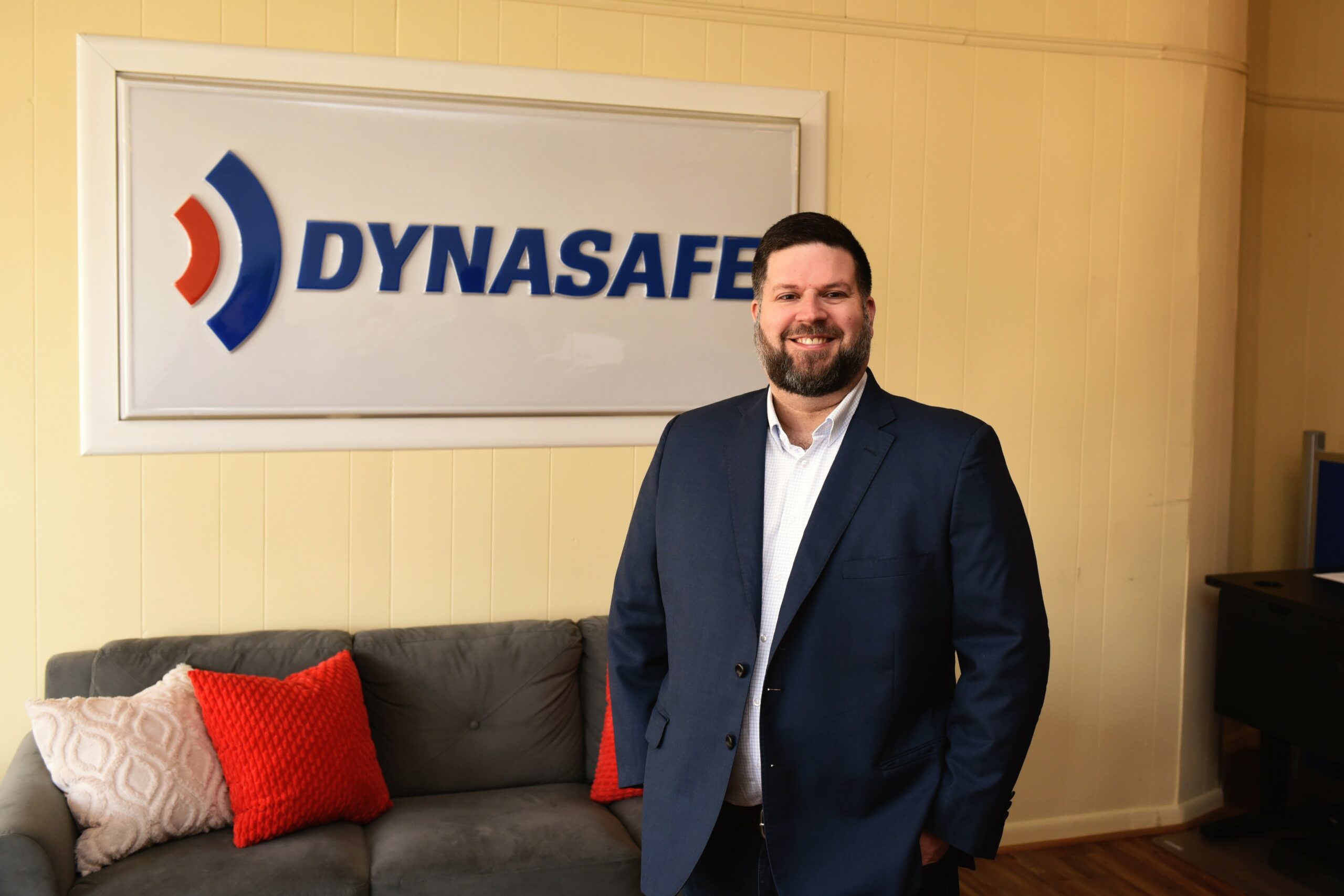
Charles Diggs is the Chief Executive Officer of Dynasafe, an international company focused on demilitarization, with headquarters in Karlskoga, Sweden. He joined Dynasafe in 2014 as Managing Director for the Americas, following more than 11 years of experience in chemical weapons destruction for the US Army and service as a Nuclear-Trained Mechanical Technician in the US Navy Submarine Service. Dynasafe works in decommissioning explosive devices, chemical weapons, and hazardous materials, and operates offices in Alabama, Germany, and Japan. Dynasafe takes great pride in its mission, people and the expertise it offers. For further information, please see www.dynasafe.com.

