Founded in 2022 by Ioan Bowen-Pickett, Cambrensis has quickly made its mark on the fashion world, hosting Wales’ biggest ever runway show and featuring at London Fashion Week.
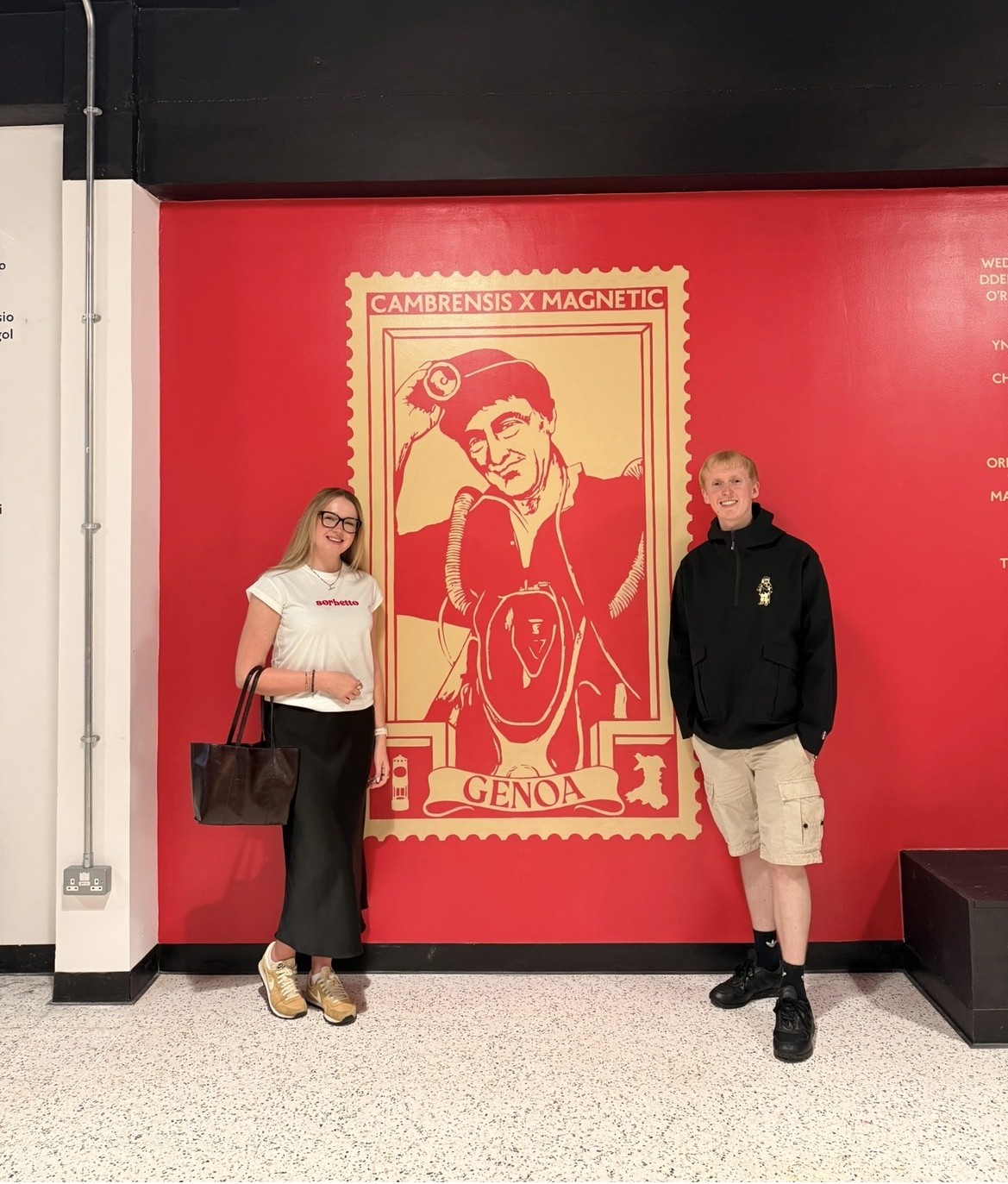
Their latest project saw the unveiling of two large-scale, bilingual permanent murals inside Merthyr Tydfil Indoor Market, honouring Ioan’s late great-uncle, Dewi Bowen, whose influence is woven throughout the Cambrensis brand. Many of the company’s clothing designs have incorporated Dewi’s original artwork, helping to carry his creative influence into a new generation.
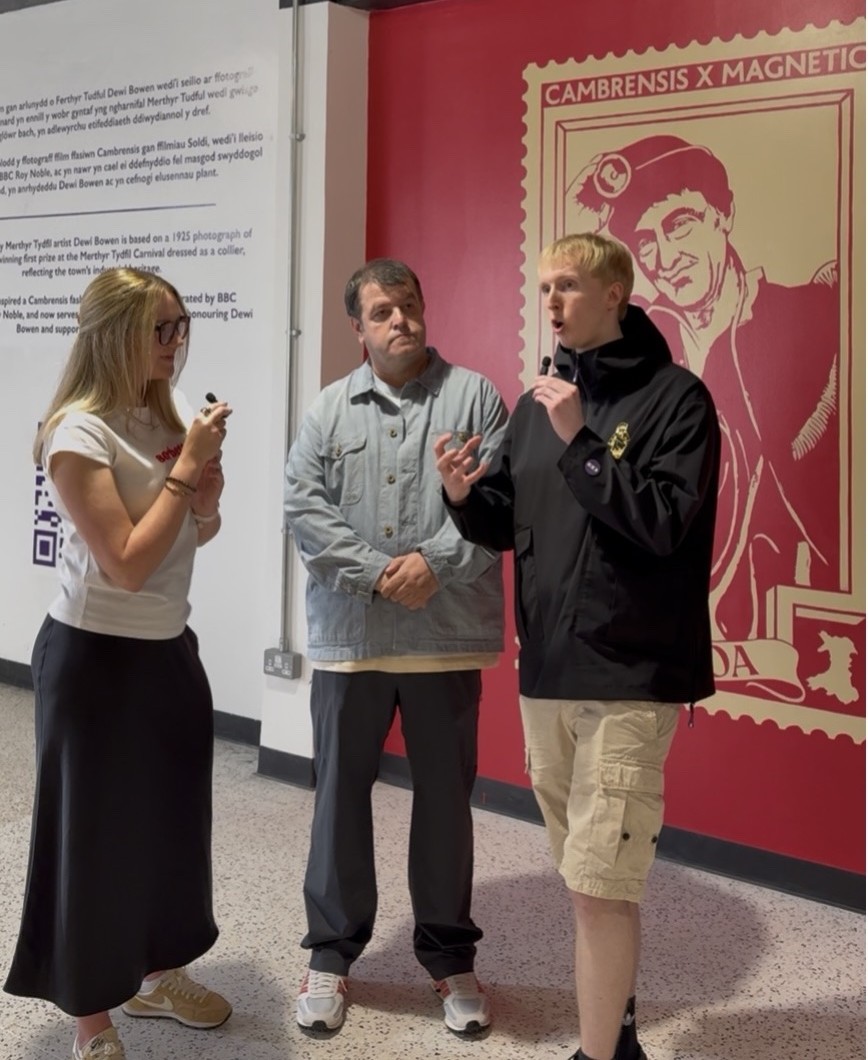
I was very pleased to be invited to the launch event for the murals and spoke with Ioan, alongside mural collaborator Tony Rivers, who also co-authored Magnetic, a fashion anthology exploring the cultural impact of Italian designer Massimo Osti’s clothing labels in the UK, particularly C.P. Company, Boneville and Stone Island.
We attended the evening event inside the market, which surprisingly made for a great event space, looking very different from the stalls that are usually open there. We were greeted by members of the team and given beverages sponsored by Brains Brewery. The event featured a small Cambrensis pop-up shop, which we browsed through before taking a closer look at the new murals.
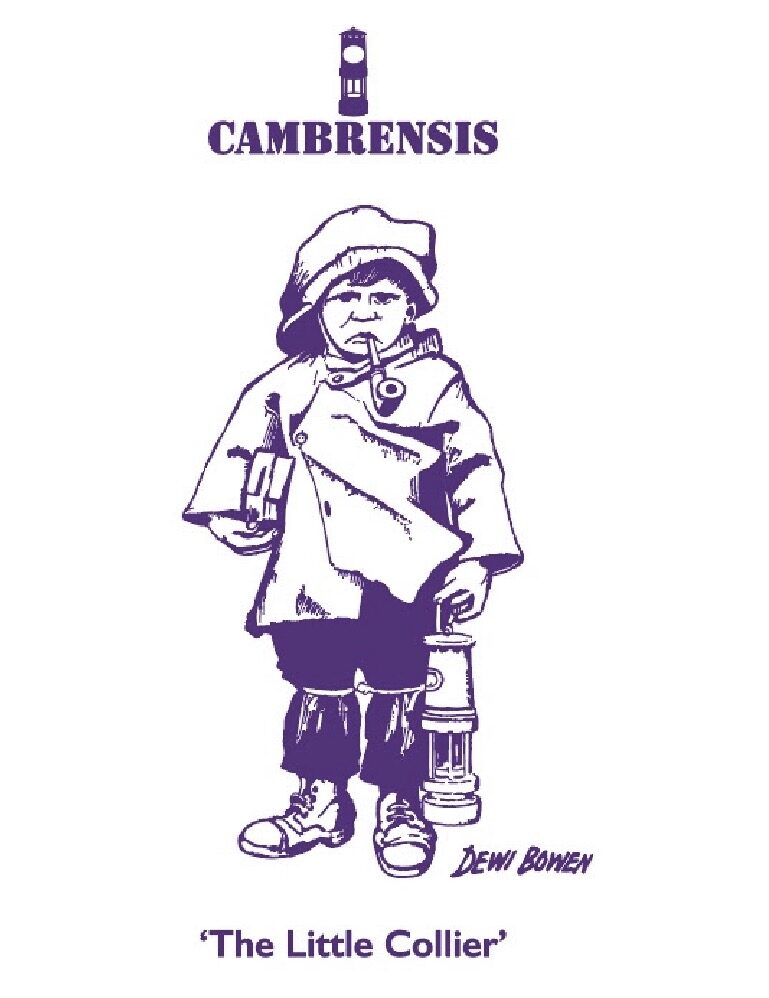
The first mural, The Little Collier, is the Cambrensis brand mascot, originally drawn by Dewi Bowen and based on a 1925 photograph of a young boy named Bert Minard, who won first prize at the Merthyr Tydfil Carnival dressed as a collier.
Ioan emphasised the importance of the setting, saying: “Merthyr possesses such rich Welsh heritage, arguably the most in Wales,” adding that storytelling is a pivotal part of the brand’s identity and what keeps Cambrensis “authentic and original”.
Ioan explains that Dewi Bowen lived in Merthyr all his life, a figure whom Tony describes as an “unwritten hero” and “legend in these parts”.
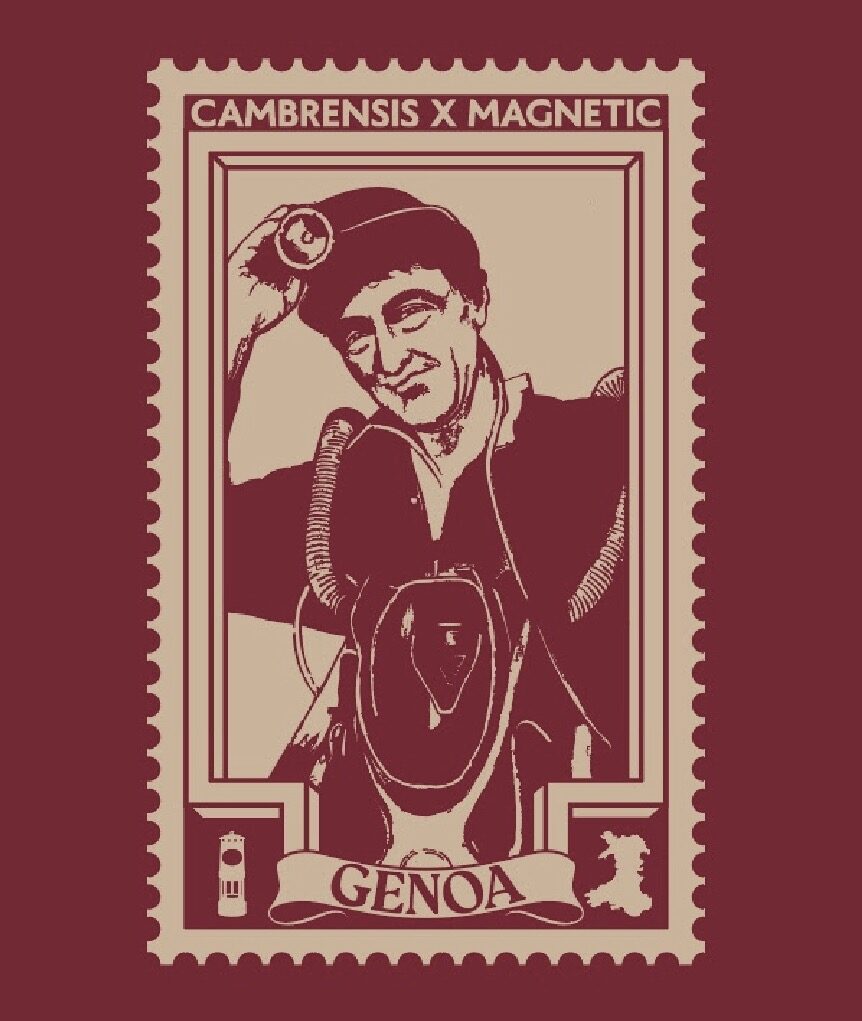
The second mural, Genoa, is a collaboration between Cambrensis and Magnetic, featuring Dewi Bowen’s illustration of a Welsh miner in the style of an Italian postage stamp. The work reflects 150 years of Italian migration to Wales.
Reflecting on the inspiration behind Genoa, Tony explains the cultural thread running through the piece: “There is a rich history of Italian-Welsh heritage in the Valleys, so we’ve tapped into that.” He adds that the Magnetic book and accompanying fashion film, both of which explore these themes, have been incredibly well received.
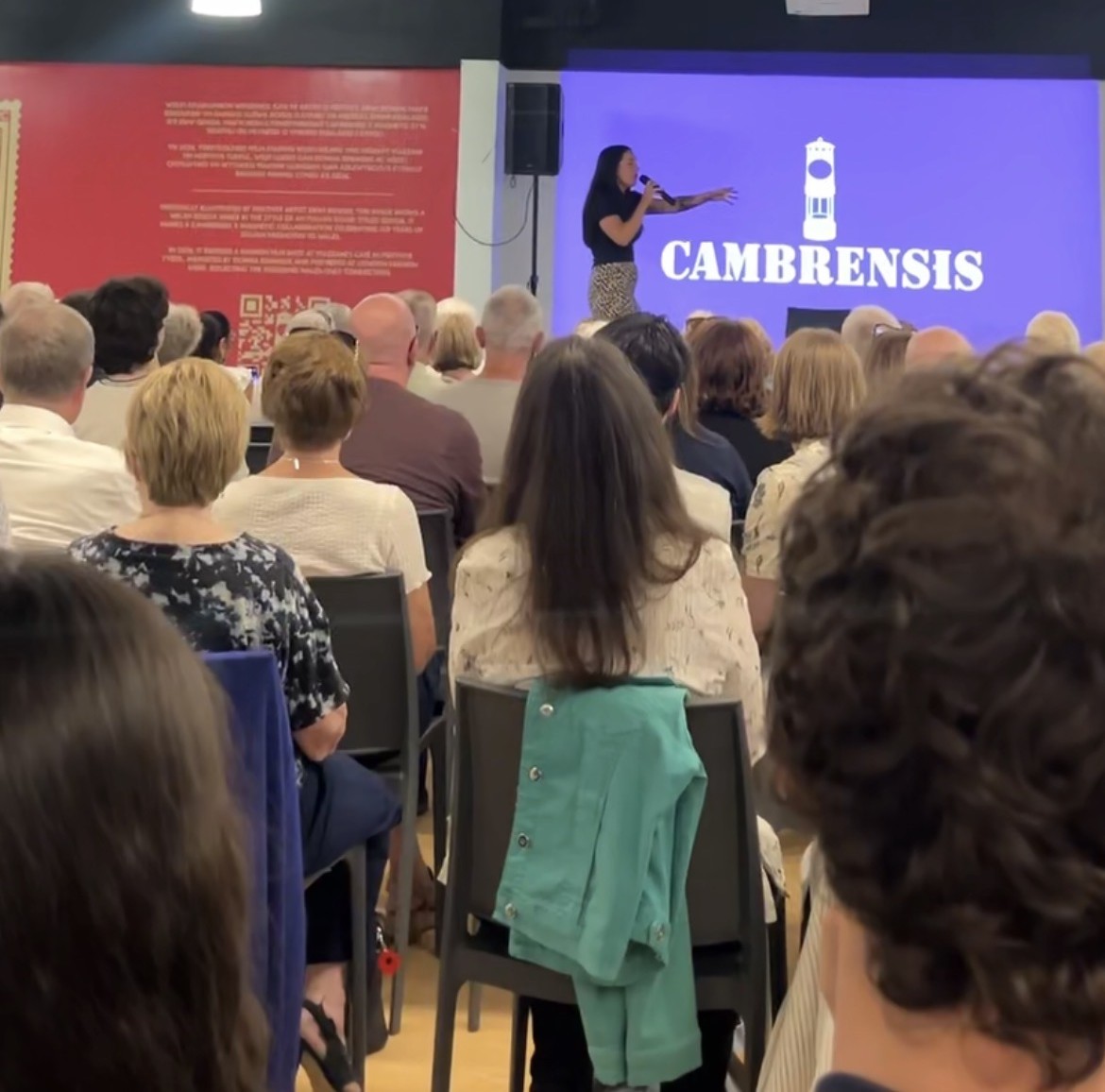
As the crowd gathered into the space and took their seats, the evening opened with spoken word poetry from the 2026 England Poetry Slam winner, Georgia Griffiths. Notably, there was no Welsh category, which felt ironic. Her performance, which explored a range of political themes, was both powerful and thought-provoking, a standout moment that showcased real Welsh talent and intensity.
We then heard speeches from the Mayor of Merthyr Tydfil and Ioan Bowen-Pickett, both of whom reflected on the significance of the murals. Ioan spoke particularly personally about the meaning behind the project and the legacy of Dewi Bowen, grounding the work in family, memory and creative inheritance.
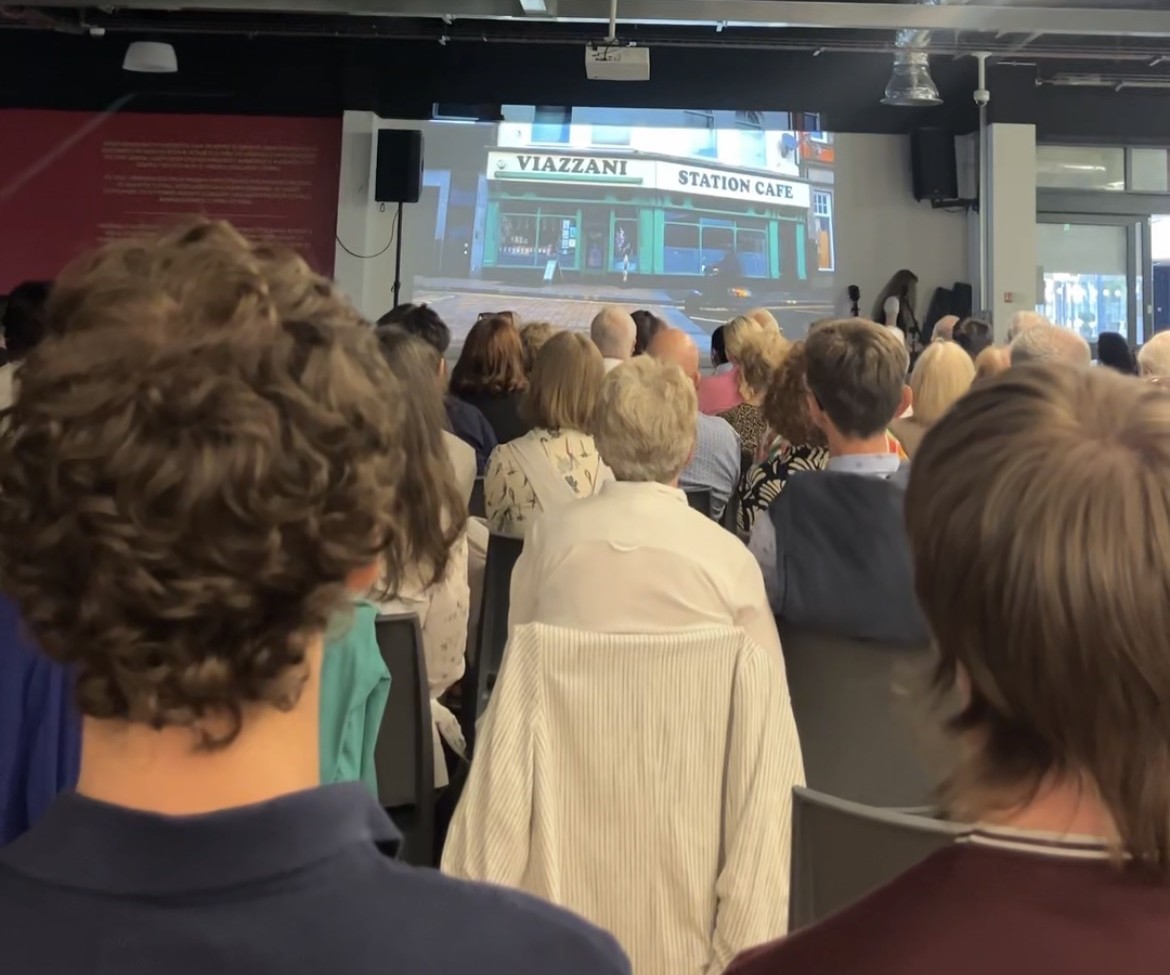
This was followed by the screening of two fashion films produced by Cambrensis, both beautifully executed and capturing a distinct Welshness that felt authentic and unforced.
In conversation, Ioan reflected that “sometimes in South Wales we’re guilty of having a small mindset,” adding that “Cambrensis is built on trial and error and just doing it.”
Seeing not only the fashion produced by Cambrensis, but also the events and films they continue to create, it is clear the brand is setting new benchmarks for professionalism in Welsh fashion, while remaining firmly rooted in its identity.
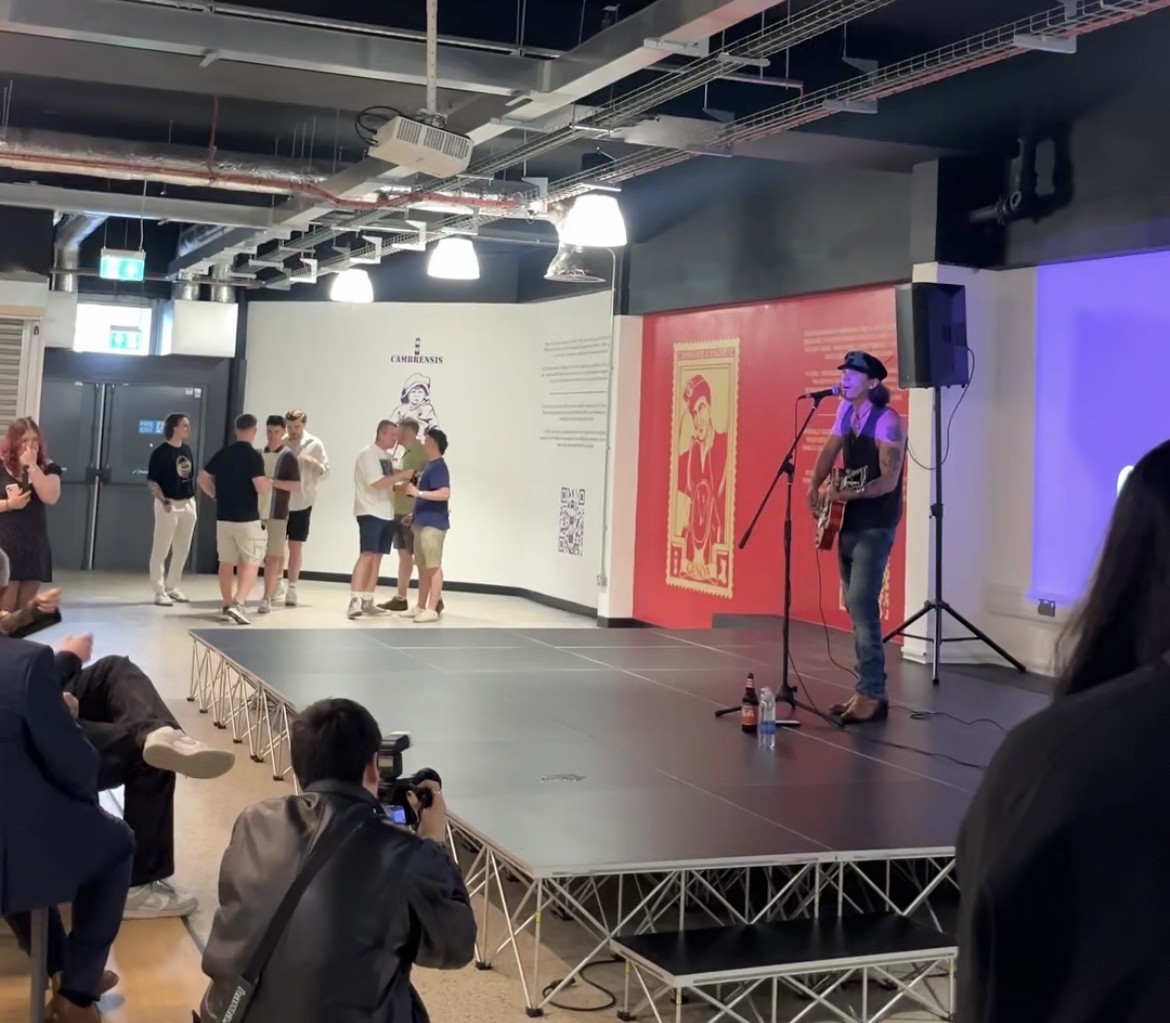
The evening ended with an energetic acoustic set from Diggs Galliers, firmly rooted in a raw, unpolished Welshness deeply tied to the Valleys.
The night brought together a range of influences, from the Valleys’ industrial past depicted in the murals, to the politically charged spoken word, to the rugged South Wales backdrop reflected in the fashion films. All of it felt to encapsulate what I had heard earlier from Tony. When asked to describe his relationship with Wales in three words, he simply replied: “Real working class.”